

What shipped, with dates
Including the two checks we removed in August. A changelog that only ever adds things is a changelog nobody should believe.
- Latest
Retention became a plan feature, alerts got a home per site, and the contact form started reaching a person.
- AddedConfigurable data retention per workspace plan - 30 days on Free, 180 on Hobby, a year on Basic, two on Pro, and up to ten by contract.
- AddedA site-specific alerts section, so scan and score notifications are readable per property rather than only as one workspace-wide stream.
- AddedFavicon probing and caching, so a site list shows the sites rather than a column of identical placeholders.
- ChangedThe AI readiness panel now prints the weight beside each of its three factors, so a low score names the group that produced it instead of showing a gap with no cause.
- ChangedInvitation handling and per-site permissions tightened, so a role genuinely bounds what a member can reach.
- ChangedClearer messaging on the billing screen about what is and is not yet chargeable.
app.pixyscan.com/w/…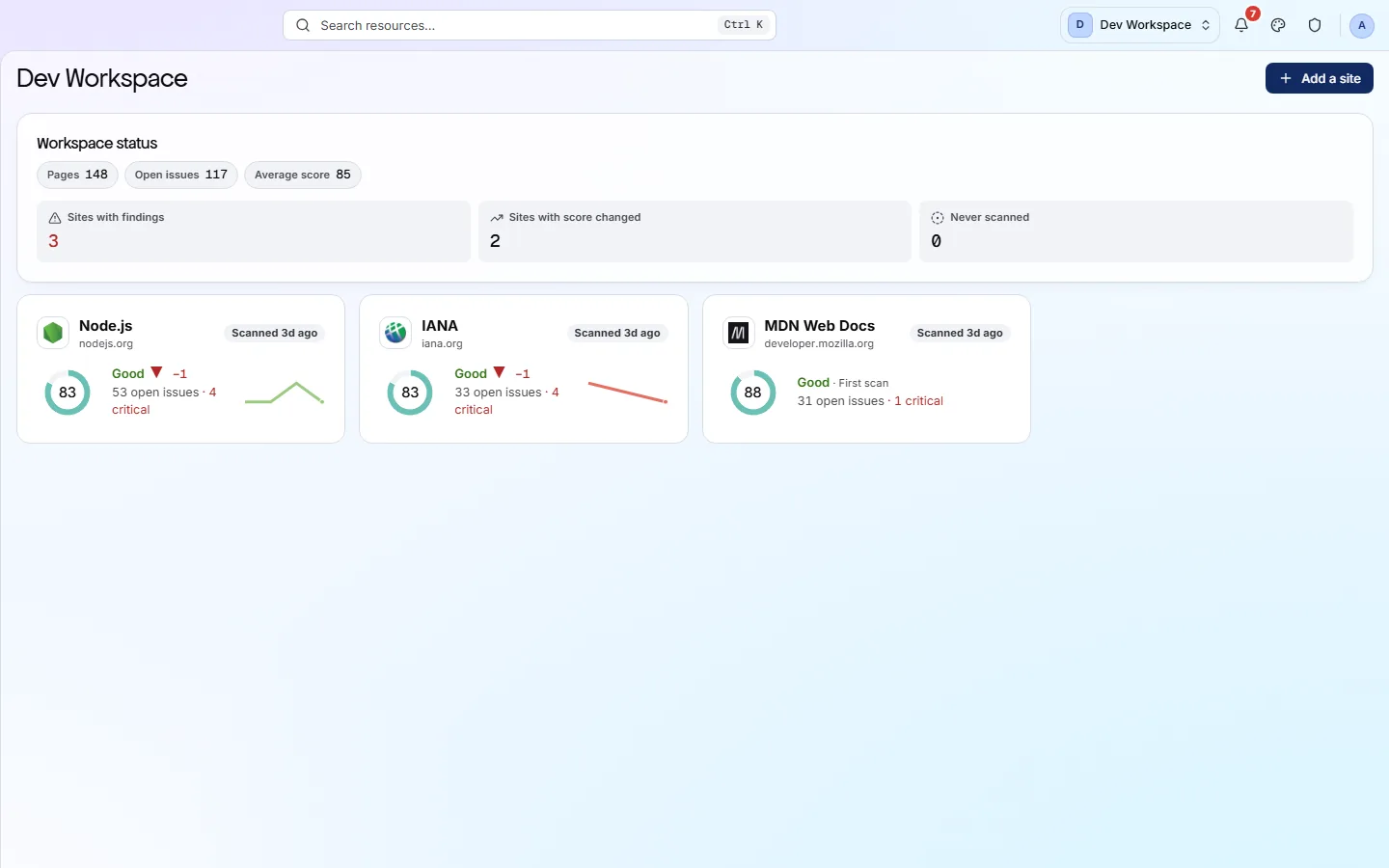
Favicon probing, landed. Each site in the list wears its own mark instead of the identical placeholder every row used to carry. The billing screens were rebuilt, and link health learned about inbound links.
- AddedInbound link tracking on the link health view - which pages link to a URL, not only which URLs it links out to.
- AddedBilling statistics with usage clusters and period pace, so you can see whether this month's credit will last the month.
- ChangedThe Plan and Billing pages redesigned around stat tiles, with the retention window shown as a plan limit.
- ChangedThe affected-pages table on an issue's detail screen rebuilt - the list of URLs a finding was recorded on is the thing people open an issue for.
- ChangedThe site rail shows the health score as a dial rather than a figure, which reads faster and is legible at a glance.
- FixedRole-based permissions on the scan action, with tests - a viewer could reach a control they could not use.
app.pixyscan.com/w/…/s/…/links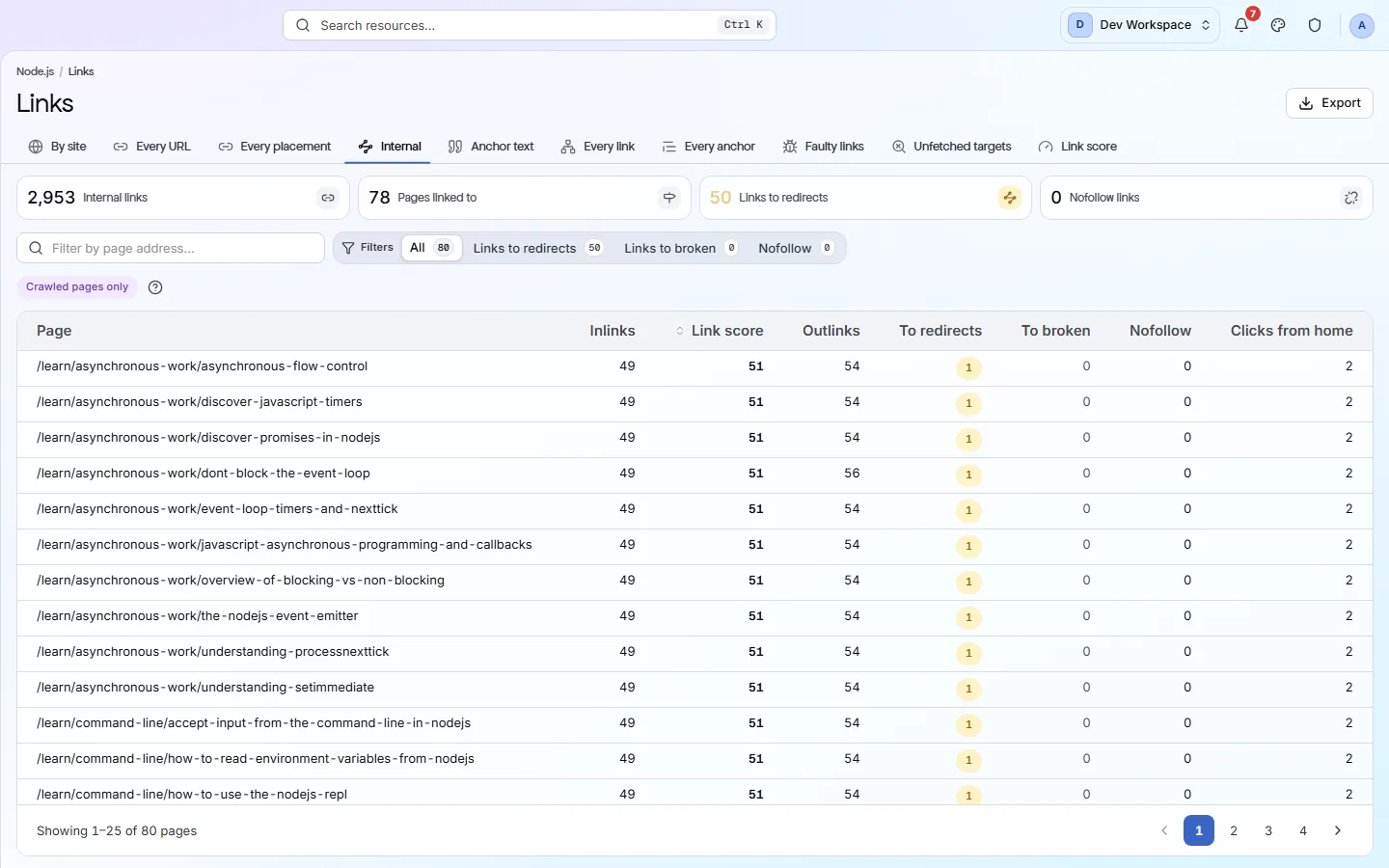
The Inlinks column is the entry above. Until this release the table could tell you what a page linked OUT to and not what linked to it. Crawl control got finer, for sites where one set of rules does not fit every check.
- AddedPer-check URL scoping: whitelist or blacklist the pages a single check runs against, for the cases where a rule genuinely does not apply to one section.
- AddedRate-limit healing mode in site settings, so a crawl that starts getting 429s backs off instead of failing the run.
- FixedCrawl depth was reported shallower than it was on some sites.
- FixedThe status-code filter now distinguishes URLs that were never fetched from URLs that answered something.
The score stopped being a number you had to take on trust, and two checks that measured editorial taste were retired.
- AddedA health score explainer in the product, breaking the number down by discipline and showing what each unfixed check is costing.
- AddedAn unsaved-changes guard, so navigating away from a half-edited settings screen asks first.
- RemovedThe question_format_headings check. How a section is titled is an editorial choice, and scoring it was enforcing a house style nobody asked us to hold.
- RemovedThe ordered_lists_howto check, for the same reason.
app.pixyscan.com/w/…/s/…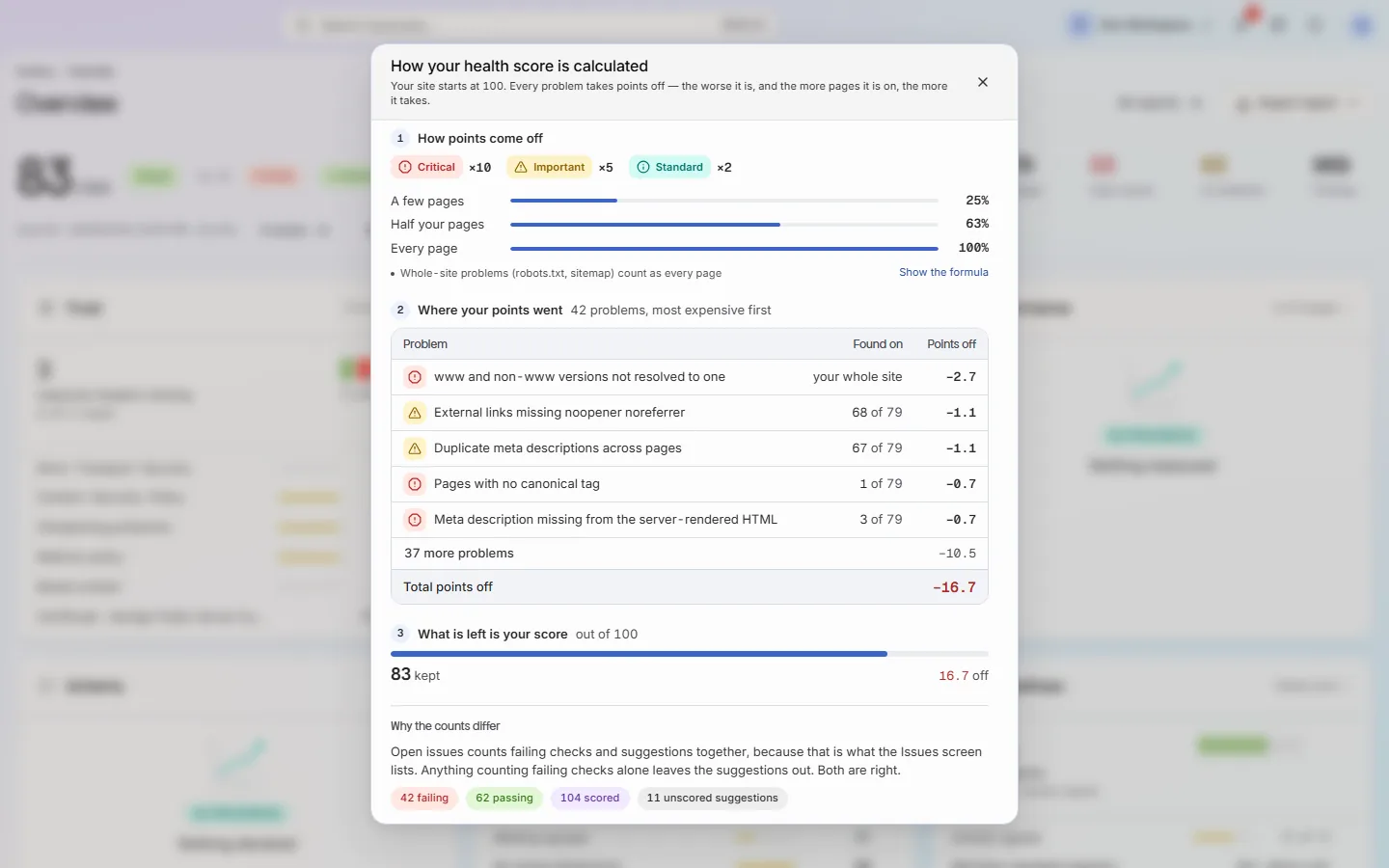
The explainer itself. How points come off, where this site's went - worst first, each with its own cost - and what is left of the hundred. llms.txt started being graded on its contents rather than its existence.
- Addedllms.txt contents are audited - whether the file follows the format, and whether the URLs it lists still resolve. Publishing a file with one junk line used to score the same as publishing a good one.
- AddedSite-level evidence on findings that belong to the site rather than to a page - robots.txt, the sitemap, a domain-level redirect.
- ChangedScan names in history cleaned up, so a list of runs reads as a list of runs.
- ChangedSitemap entry handling improved, including how a URL's discovery source is tracked.
app.pixyscan.com/w/…/s/…/issues/…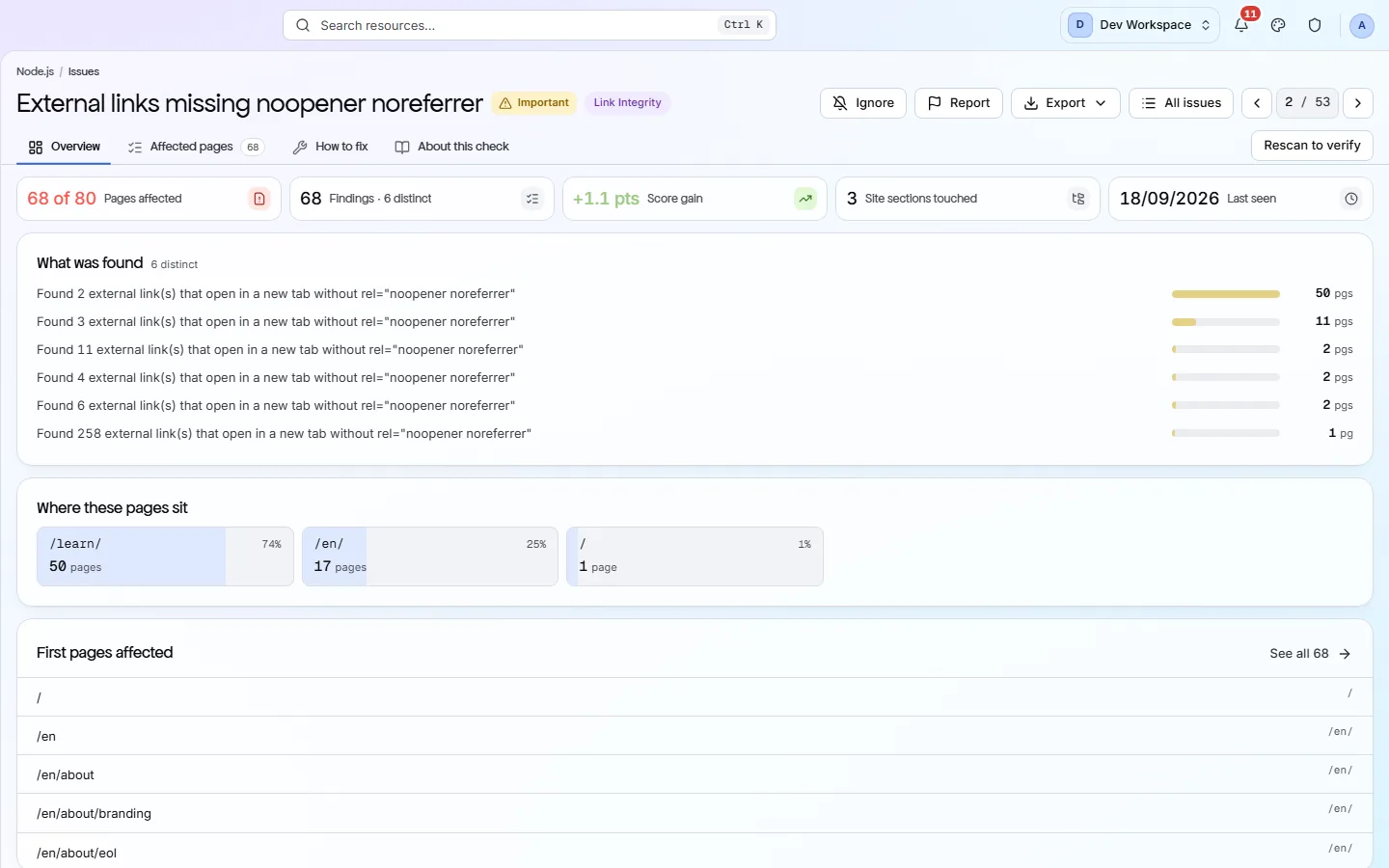
Site-level evidence, as the second entry describes it. This finding belongs to the domain rather than to any page, so it is scoped site-wide and its evidence names the hostnames instead of a URL list. The audit workspace redesign.
- ChangedThe audit workspace hierarchy reworked - the route from a score, to a finding, to the URLs it was found on, to that page's full report.
- ChangedFilter state is now remembered as you move between screens, rather than resetting on every navigation.
app.pixyscan.com/w/…/s/…/pages/…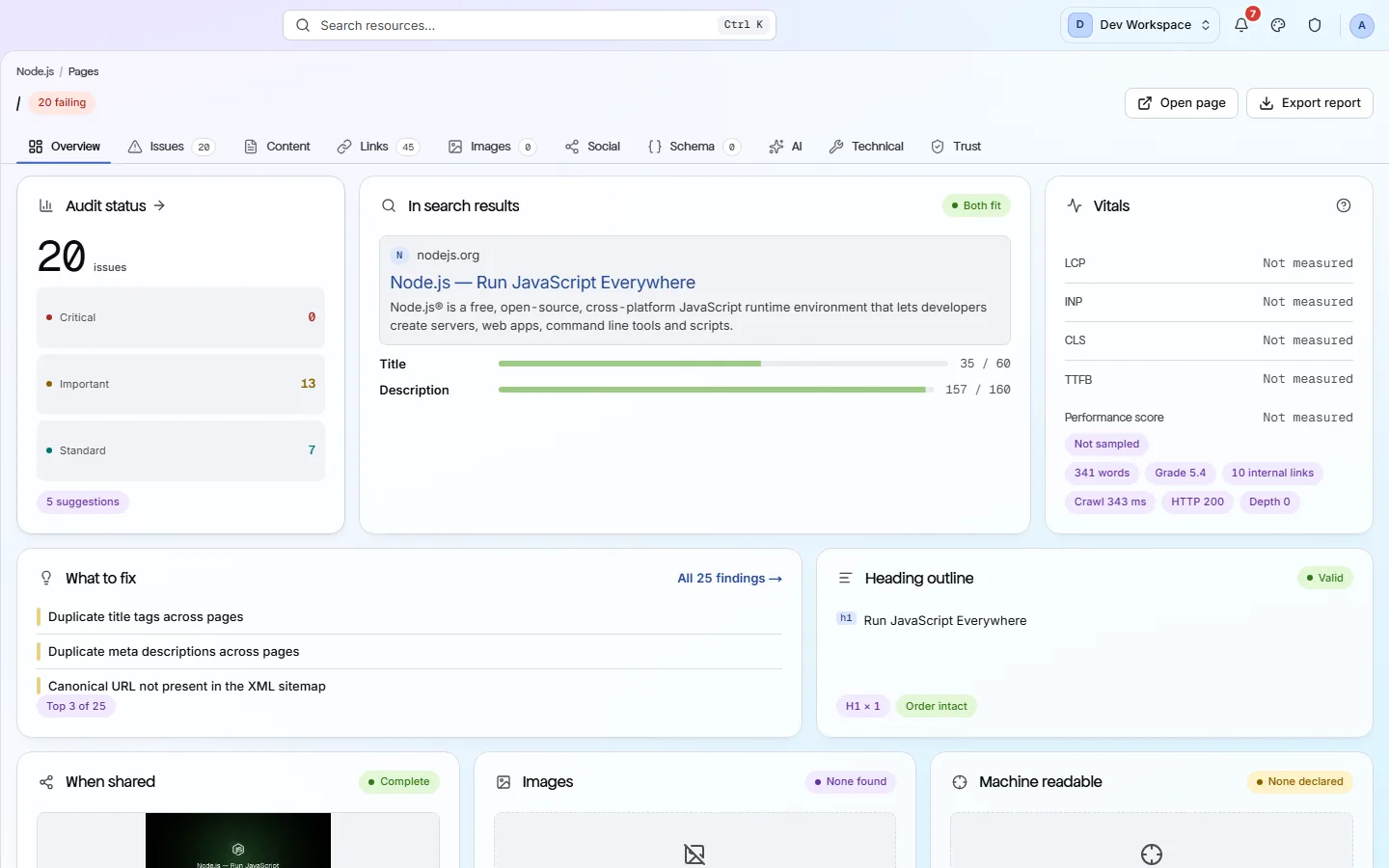
The last stop on the route the first entry describes. A score leads to a finding, a finding to the URLs it was recorded on, and a URL to this - everything the crawl knows about one page.
This page starts in August 2026, which is when we began keeping it. Work before that date is in the product but not written up here, and backfilling it from memory would be inventing a record rather than keeping one.
Prefer a feed? Subscribe to the RSS
See what is actually on your site
Point PixyScan at a URL and read the first report in a few minutes. The free plan covers one site and 500 URLs a month - enough to find out whether any of this is true.
No card required · 500 URLs a month on the free plan